Car Won’t Start on a Cold Jackson Morning? Battery or Something Else
The car started yesterday, but this morning it only clicks. A cold start can reveal a weak battery, yet a non-starting engine is not automatically a battery problem. Before trying another jump, notice exactly what the vehicle does. A few observations from your driveway are more useful than guessing which part has failed.
Listen before trying again
Repeated clicking, one solid click, a slow crank, and normal cranking without ignition describe different symptoms. A weak battery or a poor connection can affect available starting power. A starter fault may also cause clicking. If the engine rotates normally, supplying more electrical power may not address why it is not firing. Listen once, then pause rather than repeatedly turning the key.
Why the temperature can expose a problem
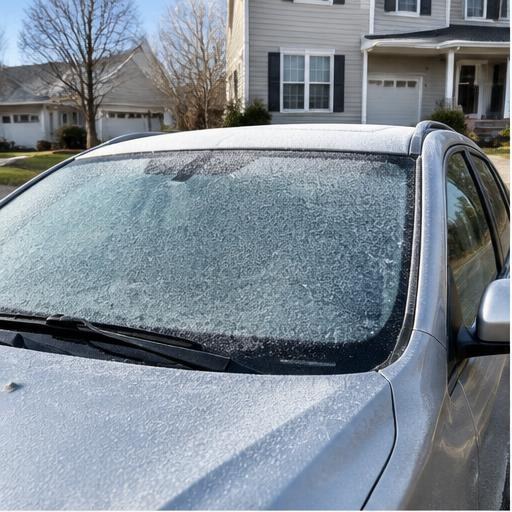
Cold conditions make starting more demanding and can reveal a battery that was already marginal. That does not establish the battery’s condition by itself. Age, charge, connections, and vehicle use all matter. A new battery can still be discharged if lights or accessories stayed on, and a charging-system problem can affect a replacement as well. Treat temperature as context, not a diagnosis.
Notice lights and recent use
Tell the person helping you whether interior lights or the dashboard come on, and whether they dim during an attempted start. Also mention how long the car sat, whether you made only short trips, and any previous jumps. These clues are useful even when you cannot find a battery date label. Looking at the vehicle’s behavior is more informative than assuming that bright headlights prove the battery is healthy.
Know when not to attempt a jump
Do not attempt to jump a battery that appears frozen, swollen, leaking, or visibly damaged. Avoid touching leaking material. Use the vehicle manual for its jump-start guidance and designated connection points. Modern vehicles can have specific requirements, including batteries in unusual locations. If the instructions are unclear or the battery looks unsafe, stop and discuss the situation rather than copying a generic online connection sequence.
A successful jump is only one observation
A car that starts with help has shown that additional starting power made a difference in that moment. It has not proved that the battery will hold a charge, that the charging system is healthy, or that the next start will be reliable. Tell us if it needed another jump recently. Repeated discharge deserves further assessment instead of making a daily jump part of the routine.
Plan the next trip carefully
If you are already late for a local errand or an I-195 journey, do not let the schedule become the diagnosis. A hurried start followed by an immediate shutdown can put you back in the same situation. Follow the vehicle guidance and the technician’s advice about what to do next. Avoid assuming that a brief idle or a very short drive will always replenish a discharged battery.
Share a useful description from Jackson
For a driveway call, give the street and whether the vehicle is nose-in, inside a garage, or difficult to approach. For a stop near Route 537 or Six Flags Great Adventure, add the parking entrance and nearest safe landmark. Your year, make, model, starting sound, and history of repeated jumps help start the conversation without requiring you to diagnose a starter or alternator.
Choose help rather than a guessed part
A jump start and a battery replacement solve related but different problems. Ask which service is appropriate based on symptoms and any on-site assessment. If the engine is turning normally but will not fire, say so before requesting a battery. HColon Roadside provides mobile starting assistance and battery replacement; the discussion should be clear when the problem appears to need a different kind of work.
A useful request starts with clear details
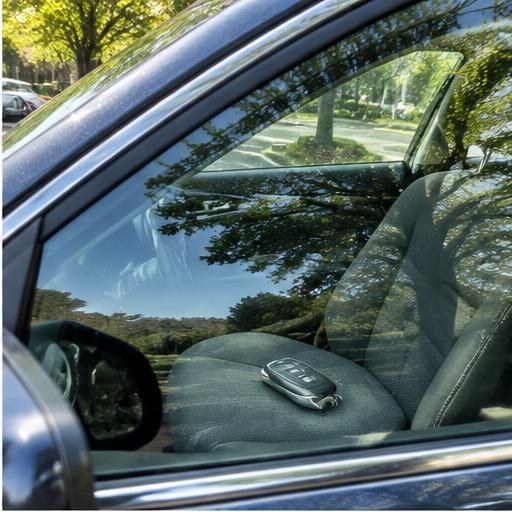
You do not need to identify a failed component before asking for help. Separate what you observed from what you suspect: the sound, warning, visible damage, or position of the keys is an observation; the assumed repair is a conclusion. Clear observations let the person helping ask useful follow-up questions. If you already attempted something, explain it honestly, including a jump, wheel-removal attempt, or movement after a pressure warning. Previous attempts and the vehicle’s current position are part of the situation, not details to leave out.
- Check immediate safety before ordinary roadside work.
- Give the exact location and vehicle details.
- Describe the symptoms and previous attempts.
- Ask about the proposed service before work begins.
Talk through the next step
Before agreeing to work, ask what service is proposed, what it costs, and which payment options are available. A submitted request is not a confirmed appointment or a promised arrival time. Keep the contact person reachable and clarify the location if you discover that the entrance or direction was described incorrectly. If access is restricted or a car cannot be approached safely, discuss that before the visit rather than assume the address alone settles access. The practical objective is appropriate help, not simply the fastest-sounding answer.
For mobile roadside assistance, call HColon Roadside. Our base is Jackson, NJ, with a 20-mile service radius. Call us with what happened and where you are, and we bring the right service to you.