Broke Down on the Garden State Parkway: What to Do First
A breakdown beside moving highway traffic is different from a car that will not start in a driveway. Before thinking about a spare tire or a battery, focus on where the vehicle and occupants are positioned. Your next step depends on the immediate conditions, not on how inconvenient the delay feels.
Put immediate danger first
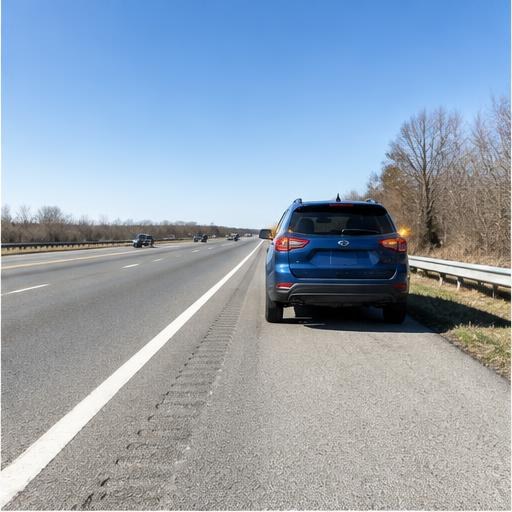
If the vehicle is in a live lane, someone is injured, smoke or fire is present, or the position feels unsafe, call 911. Do not begin an ordinary roadside repair while exposed to traffic. If you can move the car safely out of the travel lane, do so cautiously; if you cannot, tell emergency responders your position. A roadside service request is secondary to immediate safety.
Use hazards and avoid sudden moves
Turn on hazard lights if they work. Do not reverse along a shoulder or cross lanes to reach a preferred exit. If the car is already stopped in a safer position, avoid changing that position just to make it easier to describe. Road edges, ramps, traffic speed, and visibility matter more than getting the vehicle closer to a familiar landmark.
Make the location specific
Near Toms River, Parkway exits 81–83 are useful references; near Brick, exit 91 is helpful; near Wall, exit 98 is relevant. Include northbound or southbound, the nearest exit or mile marker you can safely identify, and whether you are on the main shoulder or a ramp. Do not walk along the road solely to find a sign. Report what is already safely visible.
Decide where to wait based on safety
If remaining in the car is safe, keep seat belts on and avoid standing beside traffic. There is no single answer for every breakdown: a vehicle exposed to a collision hazard, fire, or another immediate risk needs emergency guidance. If you must leave for safety, avoid the traffic side when possible and follow responders’ instructions. Do not gather around the damaged wheel in the shoulder.
Do not turn the shoulder into a work area
Changing a wheel, looking under the hood, and searching the trunk may feel productive, but each can place you beside fast-moving vehicles. Do not assume a wide shoulder makes the work safe. Tell the dispatcher whether there is room around the car and whether traffic is close. Safe access must be discussed before an ordinary mobile service can be considered.
Understand the Move Over principle
New Jersey’s Move Over law calls for motorists to move over when safe, or slow down appropriately, around qualifying stopped roadside vehicles displaying warning lights. It is an instruction for approaching drivers, not a protective barrier around your car. Never count on every driver seeing you or complying. Stay alert to your position and rely on emergency guidance if exposure makes waiting unsafe.
Describe the problem without guessing
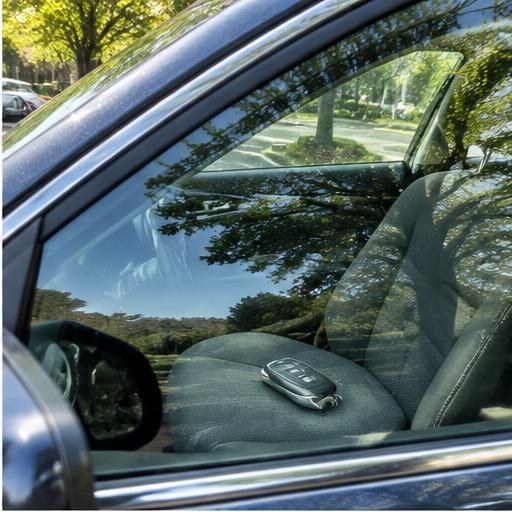
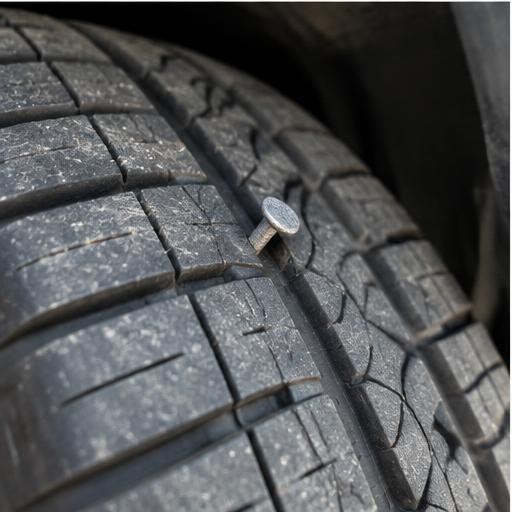
Once immediate safety is addressed, say whether you have a flat tire, a locked car, an empty gas tank, or starting trouble. Mention whether a usable spare exists and whether a locking wheel key is available. A car that stopped while running may have a different cause from a car that would not start after parking. The actual symptoms help determine whether mobile roadside work fits.
Confirm who can reach the location
Do not assume any provider can perform work at every highway position. Ask about the exact access and service suitability before arranging a visit. Restricted access and unsafe exposure can change what is possible. HColon Roadside can discuss its mobile services after the location and conditions are clear; an ordinary service request is not a substitute for emergency highway assistance when that is needed.
A useful request starts with clear details
You do not need to identify a failed component before asking for help. Separate what you observed from what you suspect: the sound, warning, visible damage, or position of the keys is an observation; the assumed repair is a conclusion. Clear observations let the person helping ask useful follow-up questions. If you already attempted something, explain it honestly, including a jump, wheel-removal attempt, or movement after a pressure warning. Previous attempts and the vehicle’s current position are part of the situation, not details to leave out.
- Check immediate safety before ordinary roadside work.
- Give the exact location and vehicle details.
- Describe the symptoms and previous attempts.
- Ask about the proposed service before work begins.
Talk through the next step
Before agreeing to work, ask what service is proposed, what it costs, and which payment options are available. A submitted request is not a confirmed appointment or a promised arrival time. Keep the contact person reachable and clarify the location if you discover that the entrance or direction was described incorrectly. If access is restricted or a car cannot be approached safely, discuss that before the visit rather than assume the address alone settles access. The practical objective is appropriate help, not simply the fastest-sounding answer.
For mobile roadside assistance, call HColon Roadside. Our base is Jackson, NJ, with a 20-mile service radius. Call us with what happened and where you are, and we bring the right service to you.