Flat Tire: Plug, Patch or Replace?
A screw in the tread does not automatically mean a new tire, but it also does not prove that a quick plug is suitable. Location, size, tire condition, and damage from low-pressure driving all matter. The goal is a sensible repair decision based on inspection, not simply making the tire hold air for a moment.
Start with where the damage is
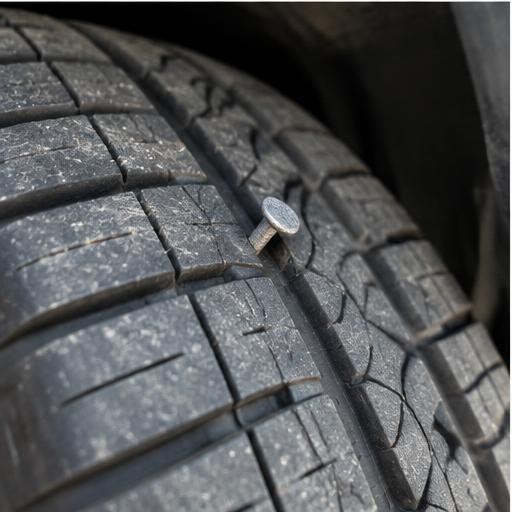
Central tread punctures are different from injuries near the shoulder or in the sidewall. Sidewall damage is generally not treated as a routine puncture repair. The tire’s structure flexes and carries load in specific ways, and an air-retaining improvisation does not establish that the structure is sound. Describe the visible damage, but do not diagnose repairability solely from an external photo.
Size and shape matter too
A small puncture and a torn opening need different decisions. Tire-repair guidance generally places limits on injury size and repair location. Existing repairs, tire wear, and the type of injury also matter. Rather than trying to estimate a hole with a tool on the roadside, keep the object in place and ask for an assessment of the actual tire condition.
Driving flat changes the question
A tire can suffer internal damage when driven without sufficient pressure, even if the original puncture was small. Continuing a few more miles may turn a repairable tire into one that needs replacement. If the pressure dropped, stop safely and tell the technician how far the car traveled afterward. That history is important even when the sidewall does not look dramatic from outside.
Plug and patch are not just vocabulary
A plug fills an injury channel, while a patch seals from the inside. A suitable repair needs to address the damage and the tire condition rather than choose a word because it sounds convenient. An externally inserted plug alone is not equivalent to an internal inspection and a properly assessed repair. Ask what method is proposed and whether the tire can be inspected adequately.
Leave the nail or screw alone
Pulling the object out may make air loss faster and does not tell you whether the puncture is suitable for repair. Avoid rolling the car around to find a more photographable angle. A tire that still holds some pressure is not necessarily safe to continue using, especially if the pressure is falling. Tell us what you see and whether the vehicle was driven after the warning appeared.
Consider the spare honestly
A usable spare may get the vehicle moving when the damaged tire cannot remain in service. Confirm whether it is a full-size or temporary spare, and check its own condition. A temporary spare has manufacturer limits for speed and distance; follow its label and the vehicle manual rather than a general internet rule. Do not assume a spare stored for years is automatically inflated and ready.
Bring the right information to replacement
If replacement is needed, the full sidewall size code matters. Vehicle details and whether front and rear sizes differ are also useful. All-wheel-drive systems can have matching requirements, so mention the drivetrain and existing tires. The correct next step is a fit discussion, not choosing a tire only because its wheel diameter looks similar or because it is available first.
Keep a New Jersey trip in perspective
A Route 9 errand, an I-195 drive, and a shore-bound Route 37 trip all become secondary to the tire’s condition. Do not continue on a flat simply to avoid interrupting the schedule. HColon Roadside offers spare changes, tire repair, and mobile replacement; explain the damage and location so the appropriate option can be discussed before roadside work begins.
A useful request starts with clear details
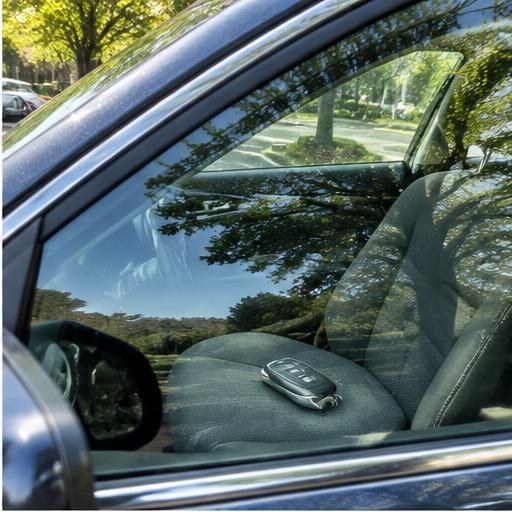
You do not need to identify a failed component before asking for help. Separate what you observed from what you suspect: the sound, warning, visible damage, or position of the keys is an observation; the assumed repair is a conclusion. Clear observations let the person helping ask useful follow-up questions. If you already attempted something, explain it honestly, including a jump, wheel-removal attempt, or movement after a pressure warning. Previous attempts and the vehicle’s current position are part of the situation, not details to leave out.
- Check immediate safety before ordinary roadside work.
- Give the exact location and vehicle details.
- Describe the symptoms and previous attempts.
- Ask about the proposed service before work begins.
Talk through the next step
Before agreeing to work, ask what service is proposed, what it costs, and which payment options are available. A submitted request is not a confirmed appointment or a promised arrival time. Keep the contact person reachable and clarify the location if you discover that the entrance or direction was described incorrectly. If access is restricted or a car cannot be approached safely, discuss that before the visit rather than assume the address alone settles access. The practical objective is appropriate help, not simply the fastest-sounding answer.
For mobile roadside assistance, call HColon Roadside. Our base is Jackson, NJ, with a 20-mile service radius. Call us with what happened and where you are, and we bring the right service to you.