Ran Out of Gas on Route 9 or I-195: Staying Safe Until Help Arrives
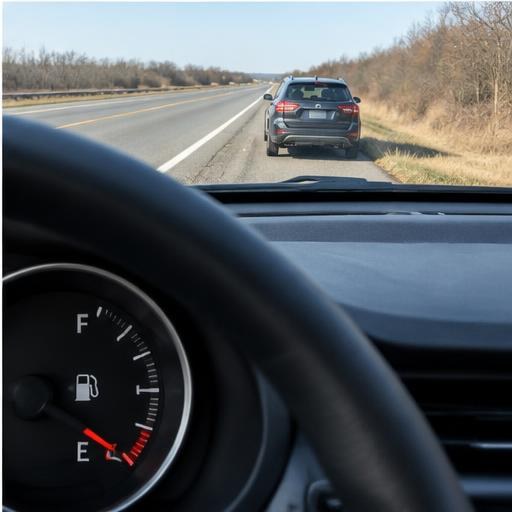
The fuel light stayed on longer than expected, and now the engine has stopped. An empty tank is inconvenient, but the first concern is where the vehicle is standing. A local parking lot and a highway shoulder need different decisions. Focus on safety and an accurate location before deciding how to get gasoline to the car.
Get out of the travel lane if possible
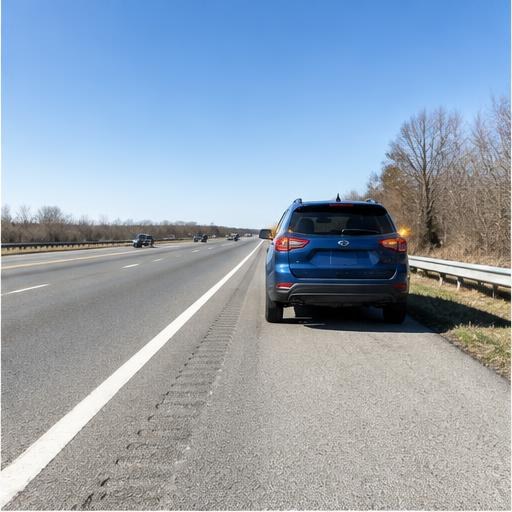
If the vehicle can be moved safely to a suitable stopping position, do so without abrupt maneuvers. If it remains in a live lane or the situation is unsafe, call 911. Do not try to push a car through moving highway traffic. Hazards help indicate a problem, but they do not make standing beside the vehicle safe in every location.
Describe Route 9 precisely
Route 9 is a long corridor with many intersections and shopping entrances. Give the nearest cross street, direction of travel, and whether the car is in a lot or along the roadway. If you stopped in a commercial parking area, identify the entrance and a visible business rather than only the town. Share what you can see safely without walking along traffic to search for better directions.
Use exits and direction on I-195
On I-195, direction and the nearest exit or marker are useful. Say whether the car is on the main shoulder, an exit ramp, or a local road reached after leaving the highway. Do not reverse along a shoulder to reach a missed station. A safe location and confirmed access matter more than trying to shorten the distance to a gasoline stop.
Avoid the roadside walk
Walking along fast traffic with a fuel can can expose you to more danger than waiting in a safe position. Do not leave passengers in an unsafe vehicle while you search for a station. If remaining in the car is safe, stay belted in and use hazards. If there is immediate danger, emergency guidance takes priority over the ordinary fuel-delivery conversation.
Confirm gasoline before delivery
The listed HColon Roadside fuel service is gasoline only. Diesel and gasoline are not interchangeable. If you do not know the fuel type, check the vehicle’s usual requirements or manual from a safe position rather than guessing. Tell us the make and model and explain any uncertainty before fuel is brought to the car. Putting in the wrong fuel creates a different problem.
Ask about the amount on the call
Do not infer a delivery quantity from a photograph or from another provider’s offer. Ask how much gas will be brought and how the proposed service works. The amount and other details need to be agreed for the actual request. A delivery is a next step for an empty tank, not a reason to assume the car can complete every remaining part of the journey without another fuel stop.
Avoid repeated restart attempts
If the tank is empty, repeatedly cranking the engine is not a useful substitute for fuel. Follow the vehicle manual and explain whether the engine stopped while running or would not start after parking. If there is fuel already in the tank, say so: a stalled engine can have another cause, and gas delivery may not address it. An accurate symptom description prevents a guessed service request.
Plan the next safe fuel stop
After fuel is added and the vehicle is able to move, plan a suitable station rather than resume the trip as though the interruption never happened. Pay attention to the gauge and any remaining symptoms. If the engine still will not start or runs abnormally, discuss that before driving. HColon Roadside can bring gas within its service area; vehicle behavior still determines the sensible next step.
A useful request starts with clear details
You do not need to identify a failed component before asking for help. Separate what you observed from what you suspect: the sound, warning, visible damage, or position of the keys is an observation; the assumed repair is a conclusion. Clear observations let the person helping ask useful follow-up questions. If you already attempted something, explain it honestly, including a jump, wheel-removal attempt, or movement after a pressure warning. Previous attempts and the vehicle’s current position are part of the situation, not details to leave out.
- Check immediate safety before ordinary roadside work.
- Give the exact location and vehicle details.
- Describe the symptoms and previous attempts.
- Ask about the proposed service before work begins.
Talk through the next step
Before agreeing to work, ask what service is proposed, what it costs, and which payment options are available. A submitted request is not a confirmed appointment or a promised arrival time. Keep the contact person reachable and clarify the location if you discover that the entrance or direction was described incorrectly. If access is restricted or a car cannot be approached safely, discuss that before the visit rather than assume the address alone settles access. The practical objective is appropriate help, not simply the fastest-sounding answer.
For mobile roadside assistance, call HColon Roadside. Our base is Jackson, NJ, with a 20-mile service radius. Call us with what happened and where you are, and we bring the right service to you.